
Mustard champ
An easy Irish side built around potatoes, milk and butter — roughly 35 minutes start to finish, and rated easy to make. Scroll down for the ingredient checklist, a serving scaler and unit converter, and the method broken into 3 steps.
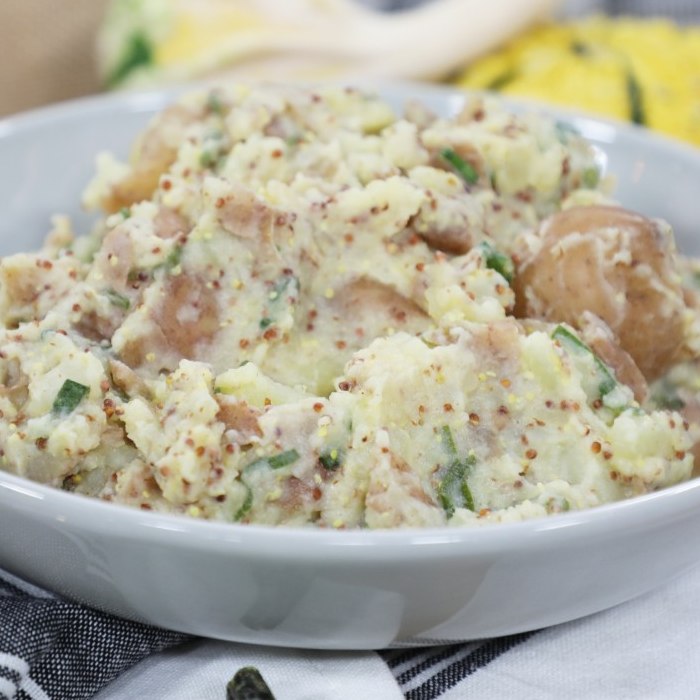
You'll mainly reach for frying pan / skillet and pan. At easy difficulty across 3 steps, it's a good one for a busy evening. As written, it's meat-free.
What you'll need
Shopping list (1)
Pantry staples (you likely have these)
Diet: vegetarian — no meat or fish, based on every ingredient listed below.
Contains: Dairy Mustard
Allergen labels are informational and may not cover cross-contact; verify every package and consult a qualified professional for medical dietary needs. Diet labels are derived from the ingredient list on this page — how we verify diet and allergen labels.
Food-safety and allergen information is general, not medical advice. Follow current guidance from your local food-safety authority, verify product labels, and seek qualified advice for allergies or health conditions.
How to make it
- Boil the potatoes for 15 mins or until tender. Drain, then mash.
- Heat the milk and half the butter in the corner of the pan, then beat into the mash, along with the wholegrain mustard.
- Gently fry the spring onions in the remaining butter for 2 mins until just soft but still a perky green. Fold into the mash and serve. Great with gammon or to top a fish pie.
You'll use: Frying pan / skillet · Pan · Large pot · Saucepan
Watch how it's made

Hosted on YouTube — pressing play loads content from YouTube.
Ingredient substitutions
- Milk
- any unsweetened plant milk · ½ cup evaporated milk + ½ cup water
- Butter
- olive oil (¾ the amount) · coconut oil · margarine
What to serve with Mustard champ
- Irish stew Beef
- Corned Beef and Cabbage Beef
- Crispy Sausages and Greens Pork
- Vegetable Shepherds Pie Vegetarian
Tips & common questions
How long does Mustard champ take to make?
About 35 minutes from start to finish — an estimate based on the 3 steps and 6 ingredients. Times vary with your kitchen and how much prep you do ahead.
What can I use instead of milk?
Try any unsweetened plant milk. See the substitutions section above for more swaps.
Can I scale this recipe up or down?
Yes — use the servings control above the ingredients and every quantity rescales automatically (fractions included). Cooking times stay roughly the same; very large batches may need a little longer.
Is Mustard champ vegetarian?
Its ingredients contain no meat, fish or shellfish, so it is suitable for vegetarians. Check any cheese for animal rennet if that matters to you.
Related recipes
Structured source recipe — not yet independently kitchen-tested by Consomee. How we source, test & correct recipes.
Recipe data for Mustard champ via TheMealDB (open database). ▶ Video. Original source. Consomee adds the scaler, ingredient tools, timing and structure — how we source recipes.